|
Super Pond Vacuum
More than a vacuum! Finally, a system that really works!
The Pond Monsta is a continuous cleaning system that is up to four times
faster than traditional pond vacuums that have to be emptied over and over.
Leaves and other debris are sucked up through the system and pumped into a
debris collector. Water from the collector can be recycled back into the
pond if sludge content is not high. For high sludge content, water can be
discharged onto lawn, flower beds, etc.
•
Powerful 115v, 350w motor with 40' power
cord
• Remote control on/off button built into
handle
• Much quieter than traditional pond vacuums
with motor underwater
• Spare impeller included with every unit
• With over 15,000 units sold in Europe it
has been thoroughly tested
• Package includes: submersible cleaning
head, 20' discharge hose,
7' telescoping handle, debris collecting basket
Check
out our pond vacuum
here!
|
 |
Pond
Bacteria
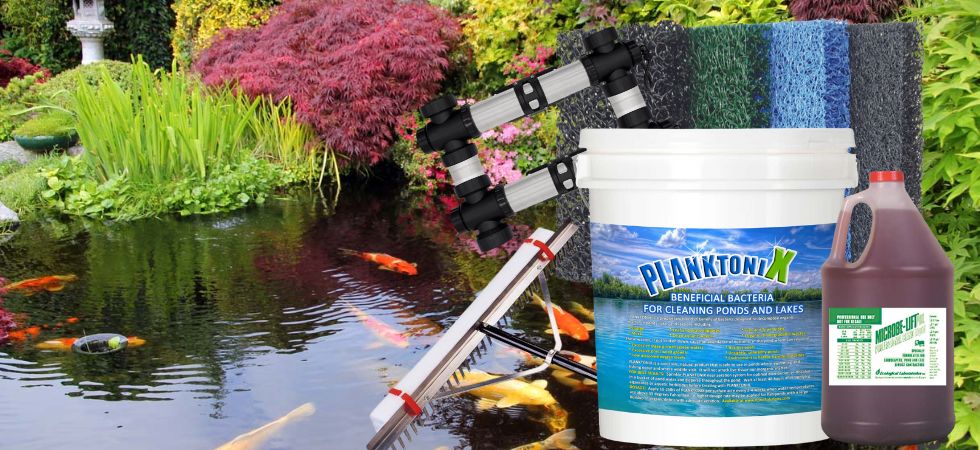
Did you know that when you add beneficial bacteria to your pond
you're actually adding an 'army' of helpful microbes to clean up your pond? It's true! Day
and night the microbes multiply in numbers and work hard at
cleaning your pond.
The pond bacteria eat/decompose fallen leaves,
sludge, silt, muck, etc. (all the nasty stuff in your pond that causes high
algae blooms and awful smelling water). By adding a good beneficial
bacteria product to your pond regularly, you'll be doing your best to keep
your pond healthy and enjoyable. For small, backyard ponds less than 50' x 50' in size)
we recommend using our Microbe Lift beneficial bacteria product. (Check
out the Microbe Lift Autumn Prep for spring, autumn and winter use, too.
Use the Microbe Lift PL for summertime use.)
For larger ponds and lakes up to several acres in size, we recommend you use our PlanktoniX®.
Check out both pond bacteria products here.
Remember, pond bacteria multiplies more abundantly
during the warm summer months so if you have a problem with your pond and
have a lot of sludge, then be sure to get on a regular treatment program for
your pond to decompose the sludge (and hence, clear your pond and make it
healthier). Often times, you can double the dose if you use an
aerator to accelerate the rate of decomposition.
We also have great, helpful advice on the following
page regarding
pond maintenance issues and some
information below. It's definitely worth the read! |
 |
|
Pond Algae Information
Answers to the
infamous question:
HOW DO I
CLEAR MY POND OF ALGAE AND MAKE THE WATER CLEAR?
First of all, there's primarily 2 types of algae that plagues most
people's ornamental ponds or water gardens; string algae and the notorious plankton algae that makes your
pond water green like a "lovely" bowl of split pea soup (yuck). Both
types of algae grow by somewhat different methods, so I will explain each one of them to
you individually.
String algae is pretty simple. It usually grows along
the bottom or edges of your pond or water garden
where there isn't a lot of water circulation. It looks like a bunch of
green hair and looks pretty nasty. To kill the string algae in your
pond you need to
sprinkle
it liberally with Kosher Salt ( it must be Kosher Salt or
non-iodized salt and NOT table salt). Let it sit for at least 3 days
and then brush off and rinse and clean the pond thoroughly. There
CANNOT be any fish in the pond during this time, so the
choice is yours and if you are set up to remove your fish and if it's worth
the hassle. You can also use our
Green Clean
to kill the
string algae without emptying the pond or water garden. You can find out about it
here.
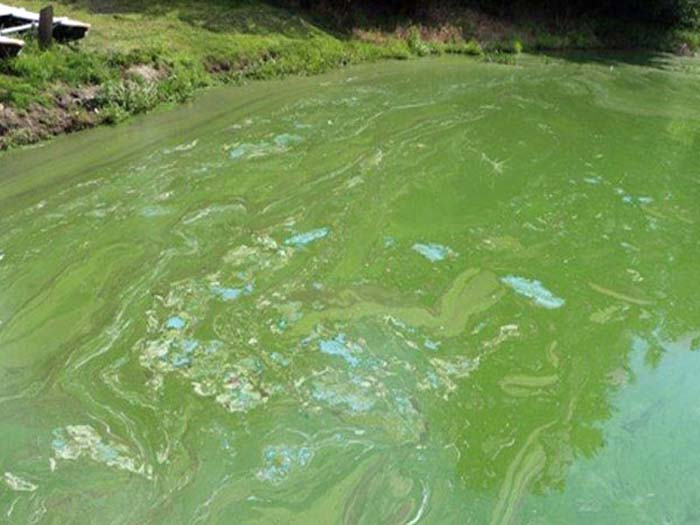
Plankton, our lovely "pea soup"
green algae is probably the most
common type of algae in ponds, water gardens or lakes. It's the stuff that makes the water look
green and causes you not to be able to see your wonderful fish. The best way to
explain how to get rid of planktonic algae is
to first understand what causes it to grow
- ahd therefore do all that you can to prevent it to grow in the first
place.
Plankton requires primarily 2 things to
grow: sunlight and nutrition. The sunlight
obviously comes from the sun and the nutrition comes from bi-products from fish
waste, dead and decaying leaves, decomposed fish food (make sure you don't over feed your
fish) decaying aquatic plants and weeds, and nearby
chemicals and fertilizers that flow into the pond (particularly if your
pond sits in a lower part of your yard). Most ponds I've seen have at least some, if not all of the above
nutrients in their pond or water garden (and green water, too!). The way to get rid of or
reduce the amount of algae in your pond is by reducing the amount of sunlight and
nutrients available to the algae. Sunlight can be reduced by providing shade to your pond
or water garden either by reducing the sunlight available
to it from above or by adding
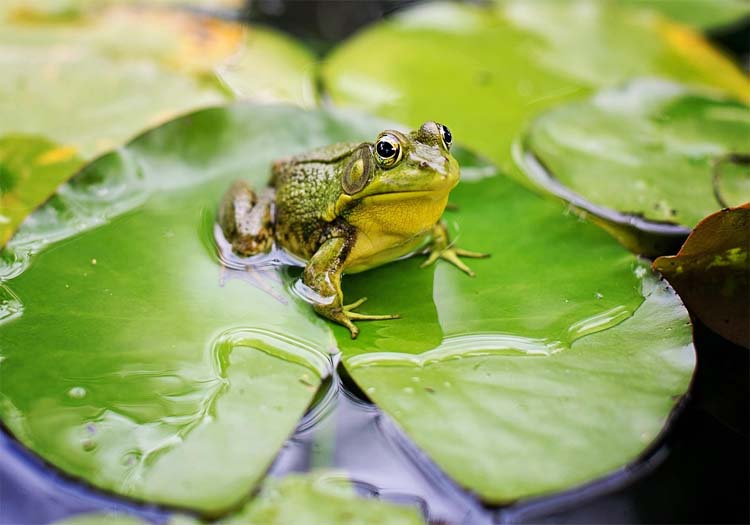
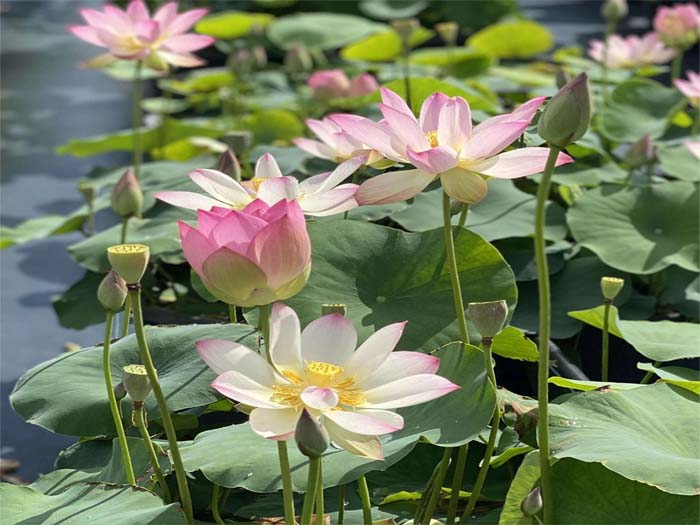
aquatic plants such as water
lilies or other floating plants including water hyacinths
which will block some of the sunlight that filters through the water below. The leaves of
these plants help to cover the surface area of your pond and also make the pond look
pretty. You can also use an aquatic "sun blocker" such as
Aqua
Shade for a variety of backyard ponds
& water gardens including koi ponds, fish ponds, all types of water gardens and lakes.
Using an aquatic sun blocker will color your
pond anywhere from a black color to black/blue or aquamarine, depending on
what type of sun blocker you use. Nutrients on the other hand,
can be reduced in a couple of different ways.
To reduce the nutrients in your pond
or water garden
which is causing your algae to thrive (and usually
pond weeds too),
you first need to clean out your pond. Get rid of any dead and decaying leaves on the
bottom or along the sides. Once you have that done, get a skimmer so you
can have leaves and debris that may blow into your pond, sucked up before they ever settle
down and start to decompose. If you don't want to get a skimmer, get a net (you also can keep out predators
such as raccoons, blue herons, cats, etc. with a net or make it a practice to clean the
debris off the pond or water garden every day or so. If you need help at getting the leaves out of
the bottom of your pond, get a
pond
vacuum that will help remove them. You can also use a
pond vacuum for your spring or fall clean up or use it as a maintenance
tool. We have some great
pond
vacuums - check them out.
The next way to get rid of the nutrients in your pond is by
adding beneficial bacteria to your pond. You see, there are 2 types of
bacteria; the 'bad' kinds of bacteria and the good kind!
'Bad' types of bacteria
can cause a lot of problems to your fish's health causing
all sorts of problems like eating away at their skin, their gills, and cause them to be sick
and eventually die. Needless to say, you don't want the "bad" type of bacteria.
The good, or 'beneficial' bacteria is a type of bacteria that is required to not
only break down toxic ammonia produced as a bi-product
from fish wastes and
convert it into harmless nitrates (referred to as the
Nitrogen Cycle - which is something you want in your pond).
Beneficial bacteria also consumes the same nutrients as algae does!
So, when
you add more beneficial bacteria, you starve out the algae, thus resulting in a clearer
pond! Beneficial bacteria also breaks down sludge build up,
"muck" on the bottom of koi ponds, fish ponds,
water gardens and really, any type of pond, water
garden or lake. It is absolutely vital to
having a
healthy pond. So what do you need to do to establish some beneficial bacteria in
your pond? Provide them a place to grow such as a biological filter, rocks, plants, and filter
media. Establishing a nice colony of beneficial bacteria can take 3-8 weeks but you
can actually get a "jump start" on things by adding some beneficial bacteria to
you pond. The best product we've used for small
ponds less than 50' x 50' in size is an all-natural product called Microbe Lift.
It works great (we use it on our own small ponds
and water gardens) and it can be used throughout the
season as a good maintenance plan to keep your pond clear. You can find out more
about it here.
We also recommend our
PlanktoniX
beneficial pond bacteria for large fish ponds
over 50' x 50' in size all the way up to lakes several
acres in size!
Beneficial bacteria's effectiveness is enhanced by the use of an aerator.
Proper aeration also adds to the overall health of the pond
or water garden.
Adding the proper amount of aeration to your pond increases the oxygen
levels within your pond that the beneficial bacteria, fish and other
'creatures' in your pond are dependent on. It can help avoid fish loss
during the winter or summer when oxygen levels can be dangerously low.
Along with using a good pond bacteria regularly, the added aeration can help
decompose the sludge and muck on the bottom of the pond and accelerate
decomposition. Remember, this sludge and muck is what is causing your
pond to be unhealthy and causing green water to grow. One important
point to know, is that by adding aeration alone, you will NOT get rid of
pond algae. By adding a pond aerator that will provide oxygen
throughout your pond - which is absolutely vital - but that is all it will
do. Many people will buy an aerator thinking it will solve their green
pond water, but it won't. You need to do the above things (reduce
sunlight, reduce available nutrients and add pond bacteria on a regular
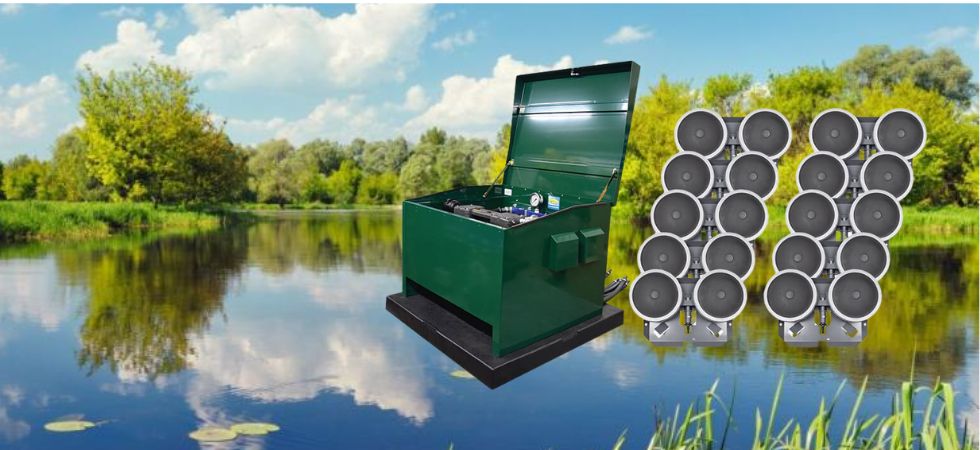
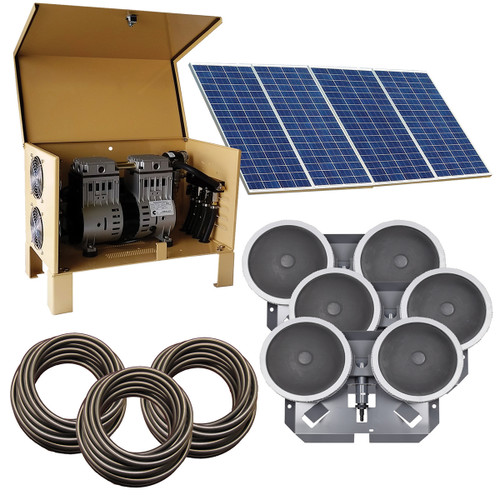
basis to clear up your pond. We have a large assortment of aeration
systems for very small tanks, small backyard ponds
and water gardens all the way up to aeration
systems for large fish ponds and lakes many acres in size. You can
find our aerators here.
I do have to mention some other products that are out on the market (and
yes, even on our website) that will "destroy" algae, but these products will
only work for a short time: they are a temporary solution.
An algaecide works by killing the algae in the pond (if
you use the correct one and amount.) Your pond can look better for a
short time but the algae blooms can soon come back at a greater rate and you
may have a worse algae problem than what you had to begin with. This
is because of a couple of things. The algaecide may kill the algae but
what happens to the dead algae??? The dead pond algae sinks right down
to the bottom of the pond creating an even larger 'compost pile' on the
bottom of the pond! This 'compost pile' eventually turns into sludge
and muck and is the very thing that causes your algae blooms! So, the
best way to get rid of pond algae are the methods described above by
reducing the nutrients (from dead, decaying organic matter such as dead
aquatic plants, dead algae, uneaten fish food, logs, leaves - anything that
will decompose and fertilizers and chemicals from nearby lawns or farm
pastures.) So, do yourself a favor and get on a regular treatment plan
of using one of our good pond bacterias such as Microbe Lift or PlanktoniX
(depending on what size of pond you have), use an aquatic sun blocker and
get yourself an aerator and use it 24/7/365 for best results.
Well, there you have it; some suggestions at maintaining a healthy,
clearer and more enjoyable pond. I hope this information helps you! Don't
forget we have a Ponds
Online Course
that explains how to create a pond, how to determine your pump and
filter size you need and much more. Take a
look at it. We also have free information throughout out site about
fish care, safe amount of fish you can have in
your pond and how to properly transfer
fish to your pond. I'm sure you will find this information invaluable.
For those of you who have very large ponds and lakes, please check out our
information for
controlling algae and pond weeds in lakes. (The way to
treat ponds and lakes over 50' x 50' in size is different than the treatment
for small backyard ponds and water gardens since obviously the volume of
water and size of area are substantially different.)
We at PondSolutions.com are happy
to help you. Let us know how we can be of service.
|